University of Arizona · Department of Neuroscience
Auditory Neuroscience Research Experience
A Course-Based Undergraduate Research Experience (CURE) · First offered Fall 2025
What is NROS 314?
NROS 314 is a Course-Based Undergraduate Research Experience (CURE) in auditory neuroscience. Rather than performing scripted labs with known outcomes, students join active research teams tackling real, open-ended questions — questions that no one has answered yet.
Students work alongside faculty principal investigators Dr. Charles Higgins and Dr. Melville Wohlgemuth exploring cutting-edge topics: echolocating bats in the Sonoran Desert, neuronal brain modeling, drone-borne sonar, and bioacoustic data analysis.
The course was made possible by an $81,688 Provost's Investment Fund grant — providing real equipment, real tools, and a real research environment unlike anything you've experienced in a typical classroom.
The Research Mindset
Research is a team effort. Your colleagues depend on you. Show up, do your part, and commit to the project for the full semester. The scientific community runs on trust — and so does NROS 314.
Your job is not to wait for instructions, but to move the project forward. When you hit a wall, consult your team, the web, the instructors — and find a way through. Use your imagination.
You may need to learn bat neuroanatomy, bird song, drone piloting, electronics, or computer programming — perhaps all at once. Be eager to learn what the project demands, and step outside your comfort zone.
Research Projects
No known answers.
Teams of 5–6 students tackle open research questions. Projects are proposed by the PIs and selected by student interest poll. Not all projects are pursued every semester. Below are the projects pursued in 2025. Enroll to hear about the new projects.
Code Name: Bat Chat
PI: Dr. Wohlgemuth
Build and deploy a 4-channel ultrasonic microphone array (Avisoft) to record free-flying bats in the field. Localize bats in 3D space, then perform altered auditory feedback perturbations. Analyze changes in call patterning and flight trajectory.
Code Name: Bat Drone
PI: Dr. Higgins
Assemble a quadrotor drone kit from ~500 components. Interface a depth camera and ultrasound sensor, establish telemetry, and implement bio-inspired echolocation algorithms. Goal: a neuronal model of bat sonar guiding autonomous drone flight.
Code Name: Bat Modeling
PI: Dr. Higgins
Computationally model how the Superior Colliculus, Inferior Colliculus, and Auditory Cortex cooperate to support bat echolocation. This project is based on a 2025 NIH proposal focusing on top-down cortical and bottom-up midbrain influences on spatial processing.
Code Name: Bat Sounds
PI: Dr. Wohlgemuth
Collect bat vocalizations at night across Tucson using Echo Touch Meter tablets. Return to the lab for signal processing: characterize call rates, sonar sound groups (SSGs), and hunting mode transitions in free-flying Sonoran Desert bats.
Semester Structure
Weeks 1 – 2 · Kickoff
Project Selection & Team Formation
PIs and students propose projects. Students rank interests by poll; PIs assign teams of 5–6. Teams meet, elect a leader, and prepare their workspace.
Weeks 3 – 12 · Research Sprint
Active Research (10 Core Weeks)
Teams set weekly subgoals and get to work. Whole-class tutorials from PIs as needed. Checkpoints every 3 weeks measure progress via the Three I's.
Weeks 13 – 15 · Final Sprint
Poster Preparation & Presentation
Teams finalize results and create research posters. Final poster presentations on the last day of class — a real academic conference experience.
Grading is based on four checkpoint presentations plus the final poster. Each checkpoint includes instructor evaluation of a two-page team PowerPoint, peer evaluation, and attendance.
Checkpoint Schedule
Plan to invest 10–12 hours per week (class + team meetings + independent work). There are no traditional homework assignments — your "homework" is the research itself.
Instructors & Staff
Dr. Charles (Chuck) Higgins
Principal Investigator & Instructor
Faculty PI leading the Bat Drone and Bat Modeling projects. Expert in neuromorphic engineering, biologically inspired computation, and autonomous systems.
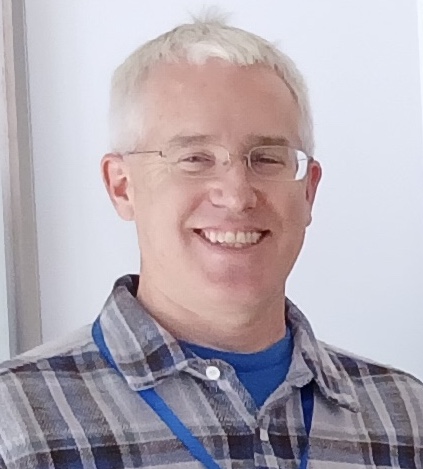
Dr. Melville (Mel) Wohlgemuth
Principal Investigator & Instructor
Faculty PI leading Bat Chat and Bat Sounds. Expert in bat echolocation behavior, auditory neuroscience, and the neural basis of spatial navigation in echolocating mammals.
Preceptors
Project technical experts
Preceptors, students from previous iterations of the course, return with the skills they learned to bring new students up to speed rapidly.
Join the Team
NROS 314 is open to undergraduate students with advanced standing who major in NSCS or Neuroscience. No prior research experience is required — only the Three I's. However, spaces are very limited, so there is an application process.
Questions? Contact Dr. Higgins.
Gallery